
Yogic Breathwork Certification.
A nervous-system–centered approach to breath, regulation, and sustainable depth.
A Different Kind of Breathwork Training
Rooted in Yogic Lineage, Informed by Modern Science
This training honors yoga as the origin point of breath practice while integrating modern scientific understanding of the nervous system and respiration.
Rooted in the yogic understanding of prāṇa, consciousness, and the gradual refinement of body, breath, and mind, this work approaches breath not as a tool for peak experiences, but as a sustained practice of attunement, steadiness, and integration.
Long before modern science began studying respiration and the nervous system, yoga understood the breath as a bridge between the voluntary and the involuntary, the physical and the subtle, the conscious and the unconscious. Prāṇāyāma was never meant to be a technique for intensity alone, but a sādhana — a devoted path of cultivation, purification, and inner steadiness.
Rather than chasing intensity or catharsis, this training emphasizes regulation, breath quality, and integration — supporting both deep inner work and everyday physiological health.
Practices are informed by classical yogic principles such as sattva (clarity and balance), steadiness, and devotion to the gradual process of inner alignment. Modern nervous system and respiratory science are woven into this foundation not to replace the tradition, but to help us understand and apply it skillfully in contemporary bodies and lives.
This is a practice of returning the breath to its rightful place: as a guide toward coherence, clarity, and embodied presence.
Why Most Breathwork Trainings Miss Something Essential
Contemporary breathwork has demonstrated both existential and scientific benefits. Many current modalities, however, focus primarily on intensity, activation, or cathartic release with a lack of integration.
What has been largely missing is a breathwork practice that:
Uses a parasympathetic entry point for release and realization
Prioritizes breath quality and devotion, as it is mentioned in the Yogic texts for spiritual health
Improves the involuntary breathing we rely on throughout daily life
Supports everyday holistic health and self actualization, not only peak experiences
What Makes This Training Different
Parasympathetic dominance and steadiness as a pathway to insight and release
Breath practices that support long-term respiratory and nervous system health
Hands on, and Verbal support interventions for every body to help build somatic awareness
A complete blend of the Spiritual, Esoteric, and Physiological Education
The business of getting started with offerings sessions, marketing to different demographics, and how to embed this work into your other offerings
The Core Philosophical Orientation
“Release and realization are approached through regulation, coherence, and steadiness — not through force.”
Breath is an Essential Practice.
Our training has some core values:
Baseline breathing patterns and mechanics need to be optimized so energy flows with ease.
Effortful practice assists us in calming the mind for deep insight.
A guide trained not only in the breath, but space holding for 1:1 and group, hands on and verbal intervention, and with ample self exploration time needs to be part of the training for it to be complete.
Prāṇāyāma Breathwork sessions have the ability to awaken subtle perception, and when we allocate time to explore ourselves in this state, there is immense wisdom and clarity available.
Integration Is a Core Inclusion
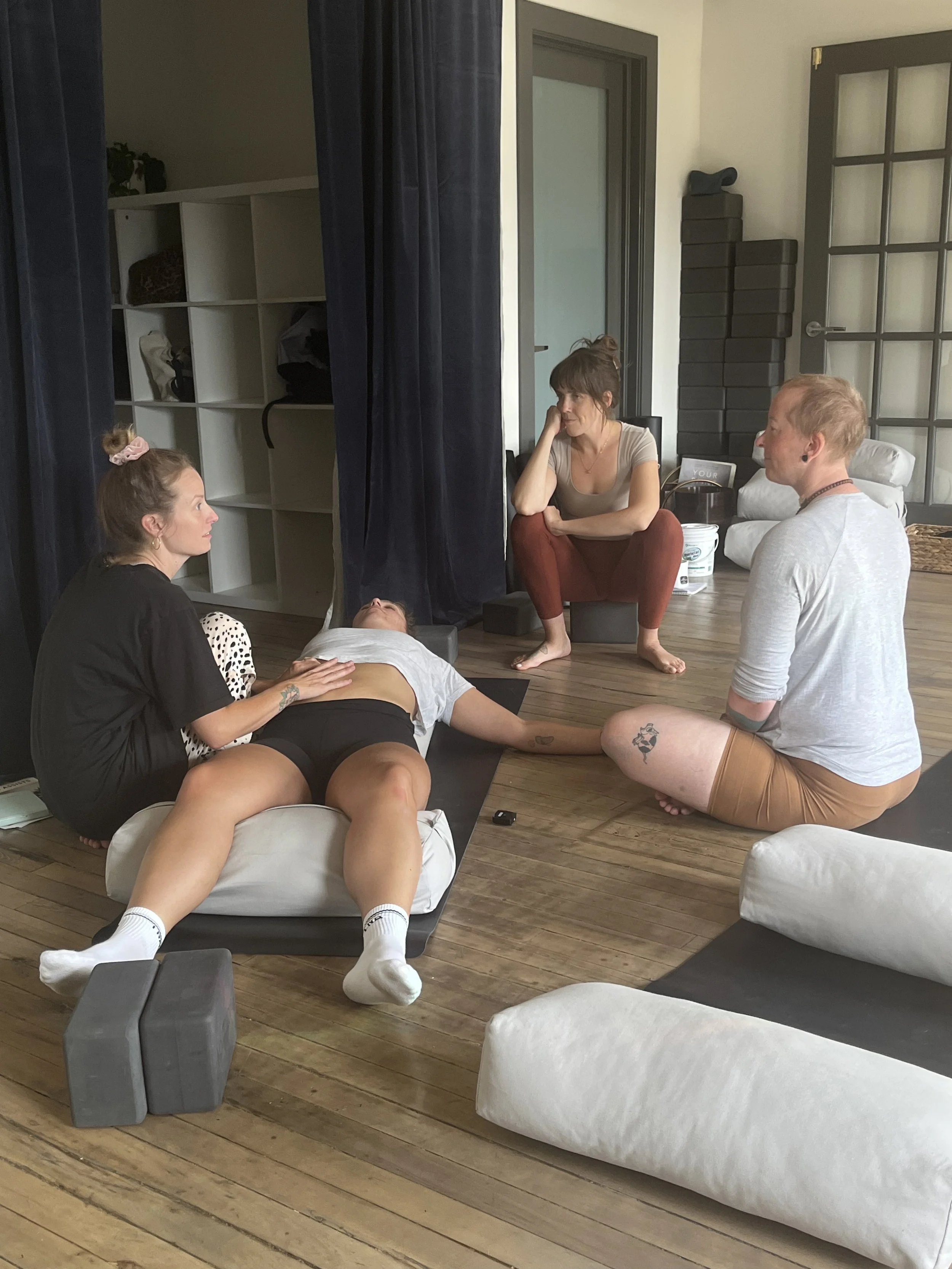
This training treats integration as a central part of the work, not an afterthought you do alone.
Practices are supported by:
Structured extended savāsana
Post-practice circling and how to hold this with confidence.
Guided self-exploration
Integration is treated as a core skill, not an optional add-on.
A Wide and Discerned Approach to Breath
Long-form breath practices
Short-form breath practices for daily use
Practices adaptable for group settings, one-on-one work, and personal practice
Participants learn when and why to use each format
Multiple Breathing Styles, Taught With Discernment
- Nasal breathing
- Mouth breathing
- Other breath pattern variations
- Each taught with scientific rationale, esoteric context, and clear indications and contraindications
It’s not just about release
- Distinction between cathartic and integrated release
- How to hold space without destabilization
- How to support meaning-making and integration
- The different benefits of your practice beyond releases

Skills You Will Graduate With
- Complete understanding of why and when to use certain breathing patterns
- How to read nervous system and somatic cues and when to intervene with support
- Facilitating group and 1:1 sessions, or embedding the practice into your offerings
- Anatomy and Physiology, Esoteric and Mechanic Sciences
- A strong and steady personal practice
Training Overview
- 120-hour hybrid certification
- Includes 100 hours of training and 20 hours of post-training mentorship
- Led by Brittanie Firth (Osteopath, Yoga Teacher/Trainer of 15 years)
- In-person weekend: April 18–19, 2026
- Sunday practices: April 26 – May 24, 2026
- Online self-paced curriculum
- 6 months access + 6 months to complete
Who This Is For
Investment
Early Bird:
$1,999 CAD
(until March 1, 2026)
Full Price:
$2,499 CAD